
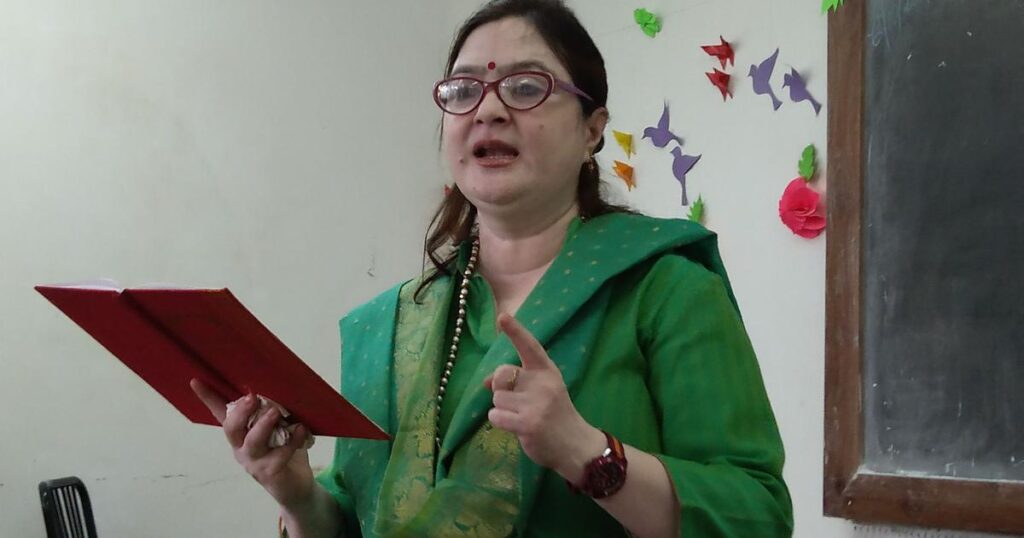
Ranu Uniyal’s poetry exhibits a capacity for blending metapoetic artistry with primal emotion.
John Thieme
In This Could Be a Love Poem for You, her fourth collection of verse, Ranu Uniyal offers a powerful poetic account of her wrestling with the profound sense of loss that pervades her everyday existence. Sometimes this loss is highly personal, and several of the volume’s most moving poems deal with the passing of the poet’s mother, but the poignancy of such personal responses to bereavement expands outwards into a more fundamental grappling with mortality, rooted in a feeling that her own existence is transient.
Her mother has been her “passport to life”, teaching her to be herself and providing her with the space to dream her own dreams, and the depth of her distress at her demise is accompanied by a sense of internal loss, the loss of that portion of self that departs when those dearest to us pass on. In a poem entitled “I Cannot Answer”, Uniyal entertains the possibilities that Alzheimer’s and a lonely funeral may await her, but remains “cling[ing] to life”. Elsewhere, she is plagued by grief, personified as a smirking stalker that remains omnipresent despite the passing of time. On “good days”, there is a temporary reprieve, but grief remains inescapable and she dreads its return.
Diverse style
A poem actually entitled “Grief” speaks of how it becomes elegy when “pour[ed] … on paper”, and several of the poems engage with elegy metapoetically, without dissipating the visceral intensity that grief has when there is no release. This kind of self-reflexive reference to the poetic genre that is being employed is prominent elsewhere in the collection, and much of the force of the poems in This Could Be a Love Poem for You emerges from their capacity for blending metapoetic artistry with primal emotion.
Some have their origins in the era of lockdown and one of these, the five-line “Lockdown Sunday Menu”, foregrounds the extent to which the enforced confinement engendered by the pandemic led the writer to enjoy a Sabbath diet of particular poetic genres, namely villanelle, free verse, sonnet, epic and rhymed poetry. Epic apart, each of these modes appears in the collection. Free verse predominates, but polished formal craftsmanship underlies the mournful villanelle, “An April to Remember”, and rhyme is used playfully in a piece entitled “Jill on the Hill”, in which the nonsense verse of the original nursery rhyme gets a feminist makeover.
“Jill on the Hill” is one of several poems that deal with women’s issues. Again, these poems often move outwards from the personal, in this case to encompass the plight of women in general and exhibit the same gut-wrenching urgency of those that deal with grief more broadly. This is particularly pronounced in the poem that provides the second of the collection’s three sections with its title, “Be a Good Girl”. This poem begins with a litany of the qualities expected of good girls, but halfway through it changes direction dramatically and offers another kind of inventory, as it itemises the gruesome fates that await good girls, violent murder and rape among them. Elsewhere, in the prose-poems, “The Audacity of Living” and “Why Do I Write?”, the persona is a woman ensnared in an acidic existence, who refuses to capitulate and remains “half alive” thanks to the power of song. Poetry itself becomes an act of female resistance.
Diverse themes
A recurrent trope of the collection’s engagement with personal trauma is stitching. In the poem, “If Only”, which is set against the mythical backdrop of the story of Nachiketa and Yama, there is an exhortation to leave wounds unstitched. Later in “I Owe You Nothing”, dreams remain similarly unstitched, but there is a movement beyond this in two later poems: “To You I Surrender” opens up the possibility of the poet’s stitching her dress with the threads of love; “From a Woman in Love”, takes what has hitherto been primarily metaphorical into literal stitching as the poet “dabble[s[ with crochet”, deserting “archaic rhymes” and replacing her pencil with a needle.
Here she says she “know[s] little” of words, but, of course, the real stitching of the poem remains verbal and throughout the collection, the role of language is foregrounded, even when it is ostensibly downplayed. Existence itself is seen as inextricably enmeshed in language. Responding to the inevitability of death in a poem entitled “The Eternal Truth”, Uniyal writes that life departs with “no breaks no clause”; after “a seamless pause”, a person becomes past tense “was”. In the poem “And She Survived”, “consonants slide” as she moves to embrace emptiness.
Loss may be uppermost but the overall tenor of the collection is dialogic and the sense of a “damaged psyche” is often mitigated by kindness, which, in a poem entitled “Kindness is All”, is seen to be as indestructible as grief. Nowhere is the force of kindness more vividly conveyed than when Uniyal writes about her relationship with her disabled son. She chides herself with having failed him “many a time”, and she speaks of sometimes feeling worn out as she gets older, but amid such recriminations on her part, she feels he showers an “avalanche of faith” on her. Similarly, she responds to those who find him “good for nothing” by speaking of the “abundance” of his love. Again, on one level, this is highly personal poetry, but with its capacity for upending preconceptions and drawing readers into the emotions it describes, it is confessional verse at its best.
The dialogic quality of the collection is present from the outset. In the very first poem, in which she writes about her love/hate relationship with English, Uniyal escorts her readers into a literary environment where competing positions vie for ascendancy. Faith jostles with doubt, grief with hope, and often the mood is subjunctive. In “To You I Surrender”, the poet’s submission to the grace of her “Lord” ushers in the possibility of a release from grief and disappointment, but the possibility of such a movement is framed provisionally, with the last line of each of the poem’s tercets starting with a conditional “if”, and even the title, This Could Be a Love Poem for You offers a prospect rather than an asserted actuality. Ultimately, the unique power of the collection emerges from its capacity to give voice to raw emotions in a manner that invites empathy because of its ability to attract readers into its dramatic dialogues. There are no easy resolutions in This Could Be a Love Poem for You, but there are numerous tentative fragments that readers can share and shore against their ruin.
John Thieme is Professor Emeritus, London South Bank University. His publications include Postcolonial Con-Texts: Writing Back to the Canon, Anthropocene Realism: Fiction in the Age of Climate Change, and books on RK Narayan, Derek Walcott and VS Naipaul. He edited The Journal of Commonwealth Literature for two decades and is also known for his creative writing, which includes the novel Cabinets of Curiosities and the poetry collections Paco’s Atlas and Digitalis.
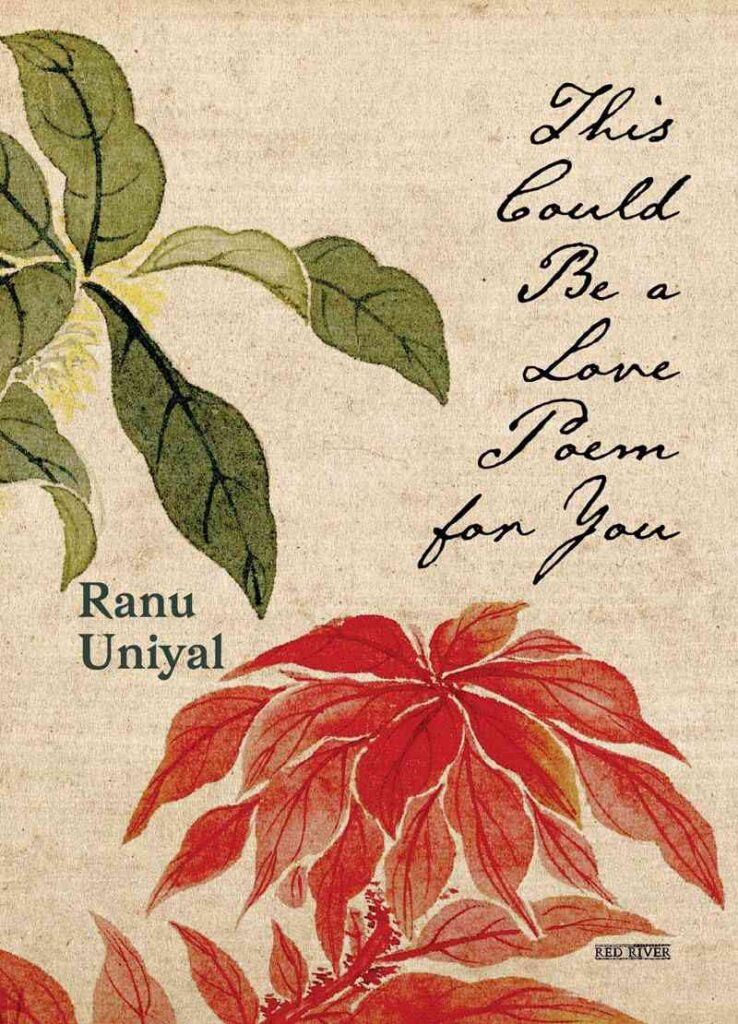
This Could Be a Love Poem for You, Ranu Uniyal, Red River Press.